Let’s be honest: this isn’t a “moment.”
It’s a movement.
Black women musicians — especially rappers — aren’t just holding their own anymore. They’re setting the pace, shaping the sound, and rewriting who gets to lead in an industry that once boxed them in.
What we’re watching right now is the rise of a new wave. And it’s loud, confident, and unapologetic.
From Fighting for Space to Owning It
For years, Black women in rap were treated like exceptions. One at a time. One lane. One sound. If you didn’t fit the industry’s narrow idea of what a woman rapper should be, you were pushed to the side.
That era is over.
Today, there isn’t one dominant archetype — there are many, and they’re all winning on their own terms.
The Heavy Hitters Who Kicked the Door Open
You can’t talk about this wave without acknowledging the artists who changed the math.
- Nicki Minaj shattered ceilings and proved longevity matters. Love her or not, she built the blueprint for mainstream dominance, lyricism, and cultural impact.
- Cardi B flipped authenticity into a superpower — raw honesty, massive hits, and a personality that couldn’t be manufactured.
- Megan Thee Stallion redefined what strength looks like in rap, balancing lyricism, confidence, and vulnerability while surviving public battles that would’ve broken most artists.
They didn’t just succeed — they made room.
The New Generation Isn’t Waiting for Permission
What makes this era different is how deep the bench is.
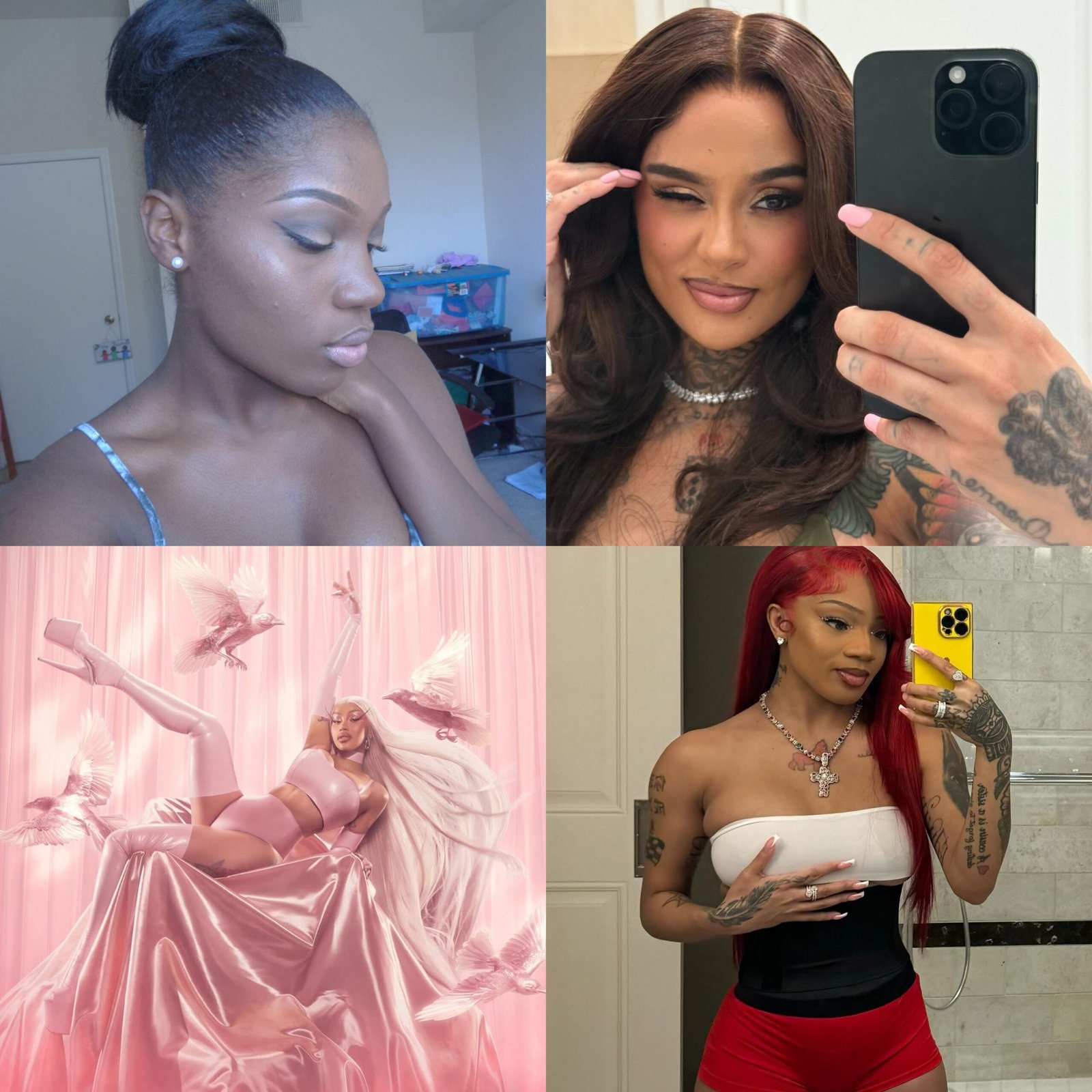
Kehlani’s rise has been one of the most organic success stories in modern R&B. From her early days on America’s Got Talent to becoming a voice for vulnerability, love, and self-expression, she built her fanbase slowly but honestly — and it paid off. Her hit song “Folded” marked a turning point, blending raw emotion with a smooth, replay-heavy sound that connected instantly with listeners. The record didn’t just chart — it stuck, cementing Kehlani as an artist who doesn’t chase trends, but creates moments people actually feel.
- Doja Cat refuses to be boxed in, bouncing between rap, pop, and pure experimentation while still owning her pen.
- Latto turned years of grinding into mainstream respect without losing her edge.
- GloRilla brought raw Southern energy back to the forefront — unapologetic, unpolished, and magnetic.
- Ice Spice flipped internet buzz into chart presence and brand power in record time.
- Sexyy Red leaned into authenticity and chaos and somehow made it work — because it was real.
These women didn’t wait for the industry to “get comfortable.” They forced it to adapt.
Lyricists, Visionaries, and Rule-Breakers
This wave isn’t just about hits — it’s about range.
- Rapsody continues to prove that bars still matter, carrying tradition while pushing it forward.
- Little Simz operates on a global level, blending storytelling, politics, and artistry with precision.
- Noname challenges the system itself, using music as critique and conversation.
- Doechii is bending genre and performance into something theatrical and fearless.
There’s room now for the thinker, the disruptor, the storyteller, and the turn-up artist — all at once.
They’re Not Just Rappers — They’re CEOs
Another major shift? Ownership and control.
Black women artists today are:
- Launching independent labels
- Owning masters
- Building fashion and beauty brands
- Controlling their narratives on social media
Think Rihanna, whose music legacy now sits alongside a billion-dollar business empire. Or Saweetie, JT, and City Girls, leveraging culture into partnerships and platforms beyond the booth.
This generation understands that music is the entry point — ownership is the goal.
A New Wave Is Forming
What we’re seeing right now isn’t competition — it’s ecosystem.
Black women are collaborating, supporting, and existing at the same time without being forced into comparison. Different sounds. Different images. Different messages. Same success.
That’s how you know something real is happening.
This wave is:
- More diverse
- More global
- More independent
- More unapologetic
And it’s inspiring the next generation of girls who don’t see limits — only options.
The Bottom Line
Black women musicians aren’t “having a moment.”
They’re building an era.
They’ve proven they can rap, sing, write, perform, lead, and own — all while navigating an industry that still doesn’t make it easy.
And if this is what the early chapters of this wave look like?
The future is going to be even louder.