
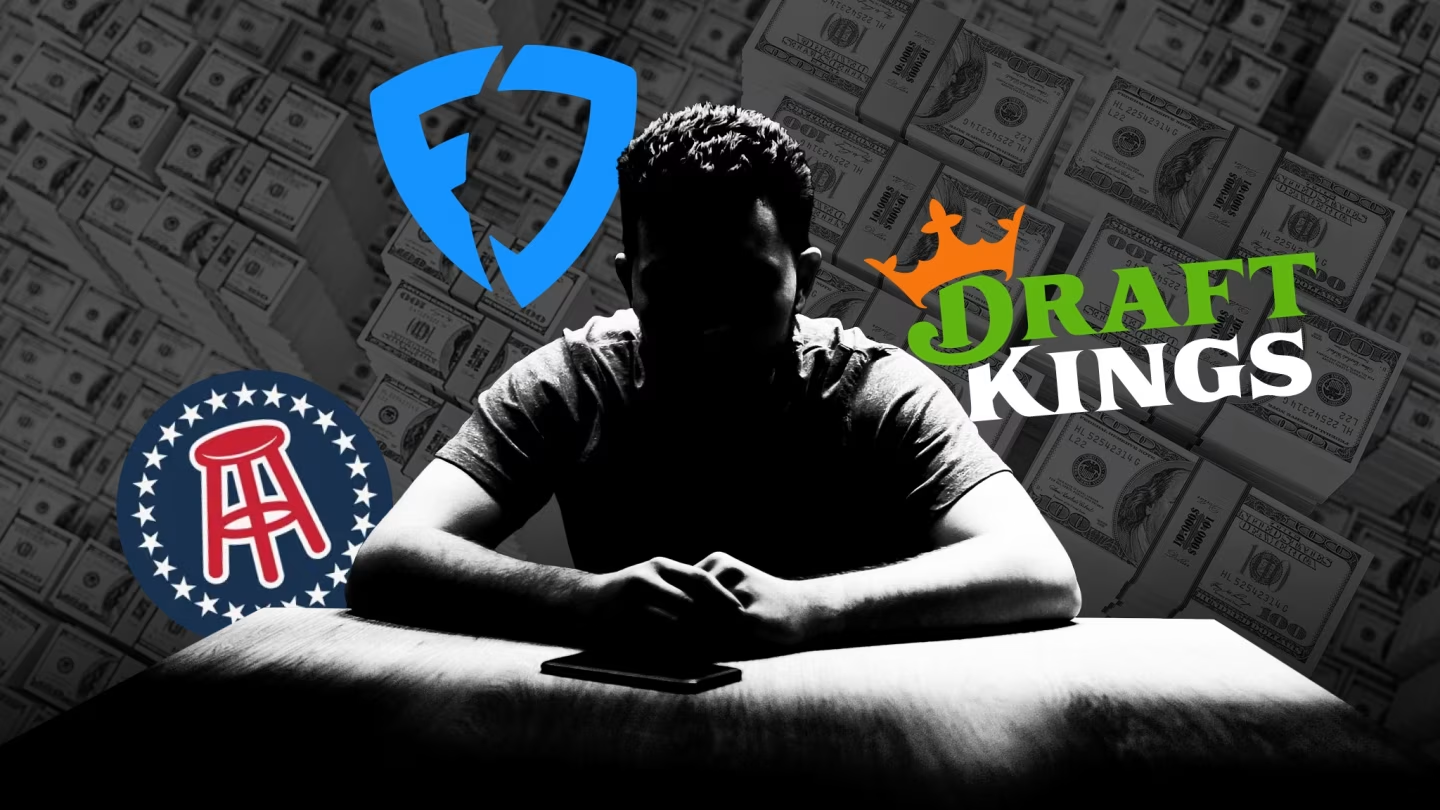
When the Game Stops Being the Game: How Sports Betting Is Warping the Fan Experience
There was a time when watching sports felt simple: you tuned in for the drama, the joy, the heartbreak, and the ridiculous moments you’d talk about the next day. Now? For a lot of fans, the experience has quietly shifted into something else entirely.
Because once you start betting—especially once parlays become a weekly habit—the game doesn’t feel like entertainment anymore. It feels like a test you keep failing.
The parlay turns every play into a personal judgment
A parlay is basically a bundle of mini-expectations stapled together: this guy needs 25+, that guy needs a touchdown, the team needs to cover, someone needs two threes, and oh yeah—no weird blowout that ruins the fourth quarter.
So instead of watching the flow of the game, you’re watching individual moments like a stock ticker.
- That wide receiver drops a pass? You don’t just think, “Tough drop.”
You feel your stomach sink because it just nuked leg #3 of a 7-leg parlay. - Your favorite player gets subbed out early? It’s not “rest management.”
It’s “they’re ruining my night.”
And that’s the trap: betting quietly trains you to experience sports through outcomes that benefit you, not through the actual show.
The emotional hangover: stress, resentment, and the “I hate this guy now” moment
Nobody likes admitting this part, but it’s real: when your ticket dies, it can leave a little bitterness behind—often aimed directly at the players.
Not because they’re bad people. Not because they owe you anything.
But because betting rewires the relationship: you stop seeing athletes as humans performing a chaotic sport, and start seeing them as walking variables that “failed your math.”
It’s why fan rage is getting uglier. The NCAA has explicitly pointed out how sports betting culture is fueling harassment toward athletes—people attacking them online because they lost money. NCAA.org
So a night that should’ve been fun becomes:
- tense watching
- angry scrolling
- and a weird, sour feeling toward the same players you used to root for
“Maybe it’s rigged” isn’t a fact—it’s a symptom
After enough bad beats, it can mess with your head. You start getting paranoid:
- “Why did the coach call that play?”
- “Why did the ref swallow the whistle right there?”
- “How does this happen every time I bet?”
To be clear: that spiral doesn’t prove games are fixed. But it does show how betting can change your mind-state from “fan” to “conspiracy detective,” especially when money and dopamine are attached.
When watching becomes constant stress, your brain looks for an explanation that makes the pain feel less random. “It’s rigged” becomes an emotional shortcut.
The real issue: betting isn’t just “around” sports anymore—it’s inside it
This is where things get deeper. Sports betting companies don’t just run ads. They’ve built formal, financial relationships across leagues, teams, broadcasts, and even the places you watch the games.
Here’s what that looks like in real life:
1) Leagues partner directly with sportsbooks
The NFL, for example, has “official sports betting partners,” including DraftKings, giving sportsbooks room to integrate betting content into NFL media properties and use official league data. DraftKings+1
That matters because it changes the vibe. Betting isn’t a side hobby anymore—it’s embedded in the league’s business ecosystem.
2) Teams sign “official” betting deals
Teams regularly do exclusive or multi-year partnerships with sportsbooks. One example: the New York Giants and DraftKings announced an exclusive sports betting/iGaming deal that included team branding access and a gameday “SportsLounge” concept. DraftKings
So when fans say, “It feels like the whole product is pushing me to bet,” they’re not imagining that pressure—it’s literally a revenue line.
3) Stadiums and arenas are becoming betting destinations
This is one of the clearest connections: sportsbooks are being built in or right next to stadiums and arenas.
The AP has covered how teams and gambling companies have been opening betting facilities in or near venues—bringing wagering physically into the game-day environment. AP News
Concrete examples:
- DraftKings Sportsbook at Wrigley Field (adjacent to the ballpark as a branded destination). DraftKings Sportsbook
- FanDuel-branded in-arena lounge at the United Center tied into existing team partnerships. BettingUSA.com
- A recent example: PHX Arena shifting to a FanDuel-branded lounge concept for members. SBC Americas
This is the “connection” people are looking for: sportsbooks and teams/venues are linked through sponsorships, branded spaces, lounges, naming rights, and partner integrations.
4) Broadcasts are adding features that keep betting front-and-center
FanDuel has been pushing deeper into the viewing experience itself—like “bet tracking” features tied to live games on FanDuel Sports Network in select markets. FanDuel News+1
That’s not subtle: it’s the game plus a built-in overlay of your wagers—keeping you locked into the money angle all night.
Why it feels unavoidable: the ad flood
If it seems like gambling logos are everywhere, research backs up the intensity. A University of Bristol analysis reported viewers seeing gambling marketing extremely frequently during some major U.S. sports broadcasts (including heavy in-stadium visuals). The Guardian
Even if you want to just enjoy the game, the environment keeps nudging you back into “what’s the line?” and “what’s the prop?”
What this does to fandom (and how to take it back)
If betting has started to ruin sports for you, you’re not broken. You’re responding normally to a system designed to keep you emotionally invested in outcomes you can’t control.
A few ways fans are pulling themselves back:
- Try a “no parlay” week and watch how your mood changes during close games.
- Watch one full game with your phone in another room. If that sounds impossible, that’s the point.
- Bet smaller, less often, or set a hard cap that you truly accept as entertainment spending—not income.
- If you feel the spiral turning into anxiety/compulsion, it’s worth taking seriously—public health and mental health concerns around sports betting are increasingly being raised. STAT+1
Because at its best, sports is supposed to be an escape. And a big warning sign is when your escape becomes the thing stressing you out the most.